
What was an ethical choice in 2014 is now the architecture for Human Identity in Agentic AI Era.
CDR 1.0 had 5 functions for PII. CDR 2.0 has 8 functions for Human Identity — Intent, Behaviour, Emotional — beyond PII. Patented. Board-auditable. EU AI Act mapped. Zero retention.
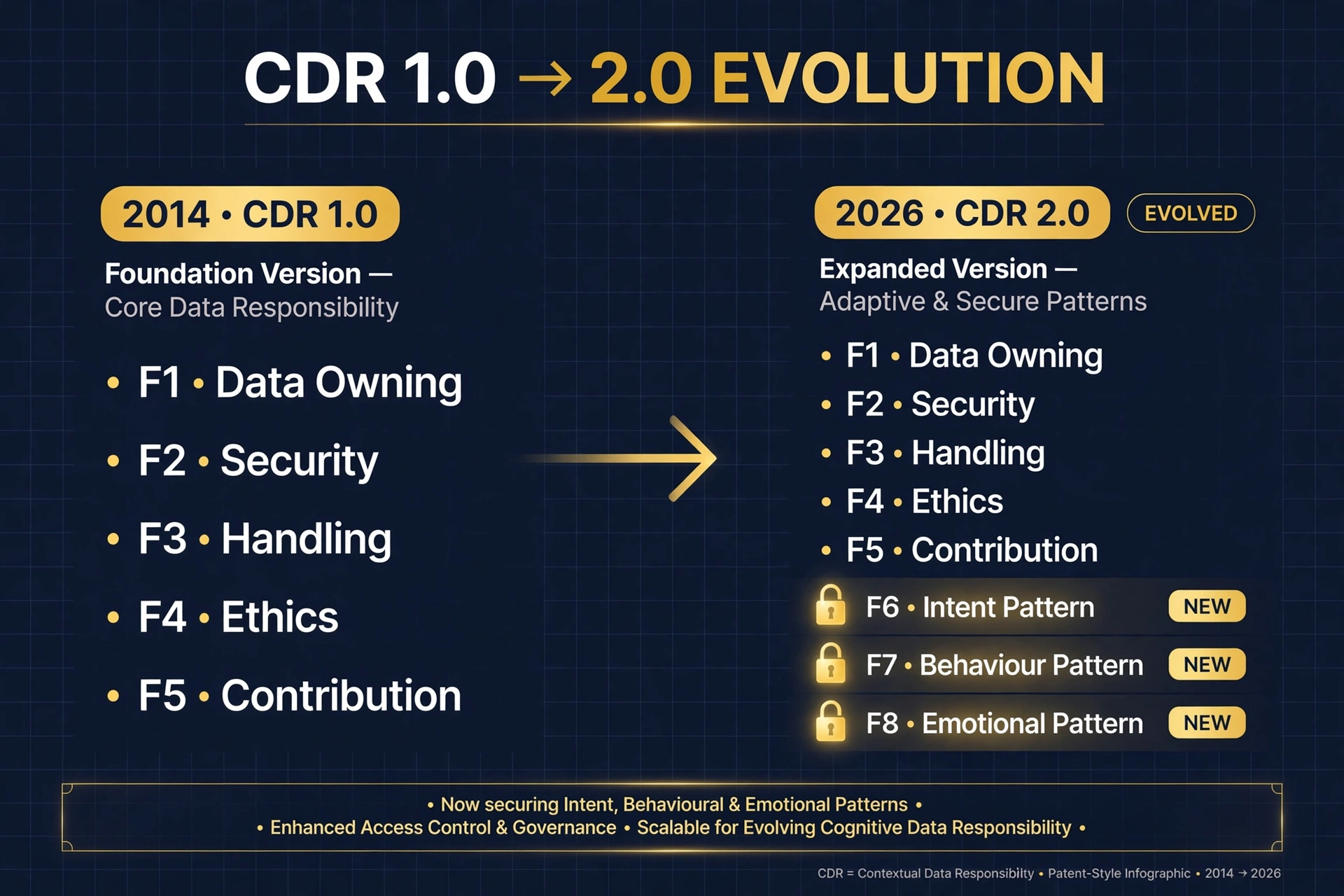
From owning data to governing why a person does what they do.
In 2014 we asked corporations to own data. In 2026, AI doesn't just store data — it infers why you act, how you behave under pressure, what you feel. GDPR governs PII. Nothing governs Intent Pattern. That's the gap CDR 2.0 closes.
A user says "just browsing" but prompt sequence shows comparing divorce lawyers for 3 weeks at 2am. Two purchases look identical — one genuine risk-averse, one dark-pattern pressured. Without intent custody, you can't prove difference.
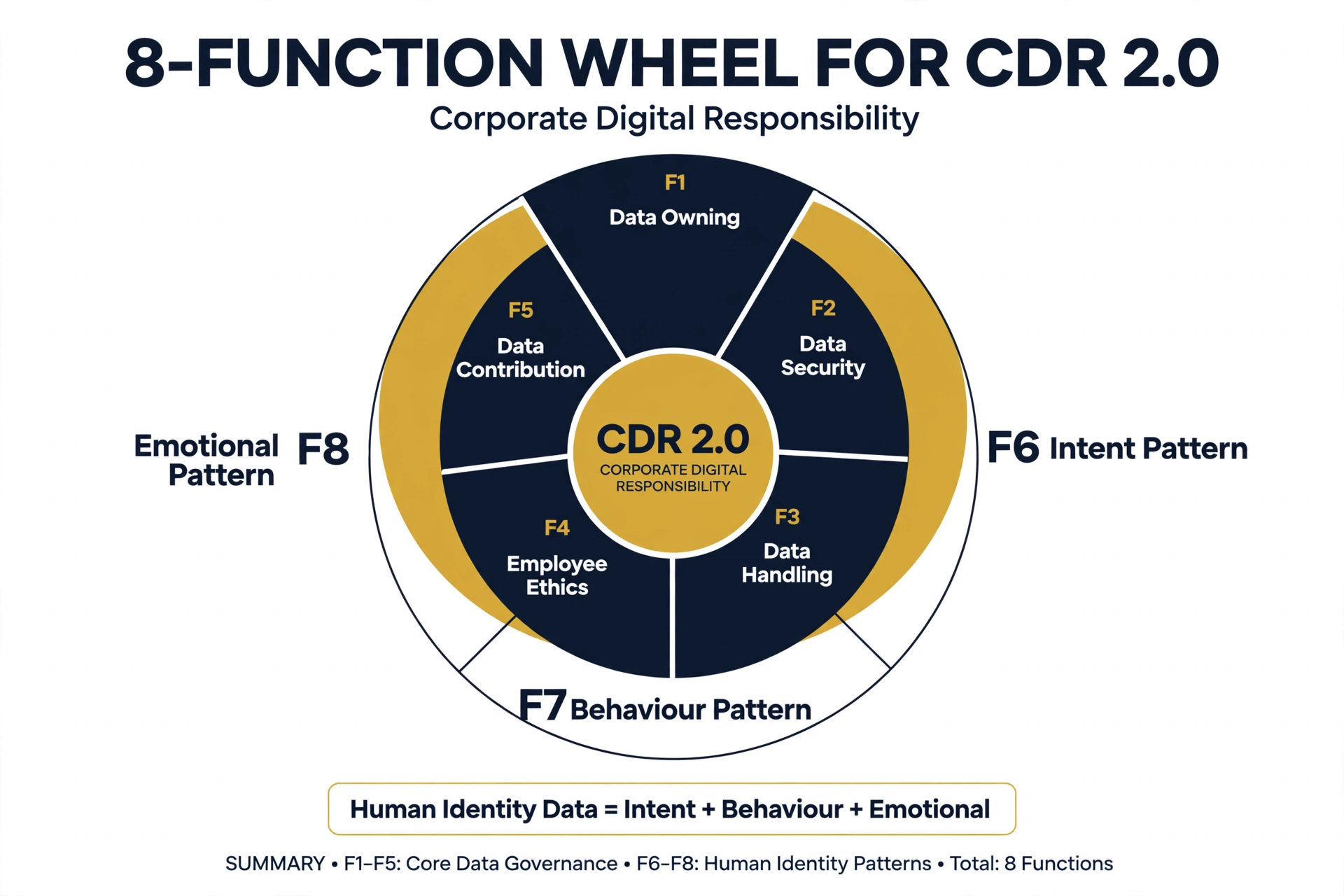
The 3 Functions that change liability from PII to Human Identity.
Full frameworks, custody ledgers, video consent templates, and claim mappings are inside the whitepaper. Below is the teaser to make you uncomfortable.
Why a Person Does What They Do
Intent is not a click. It's the sequence of inferred goals, prompt strategies, action-selection biases that reveal decision architecture.
How a Person Behaves Under Pressure
Behaviour is a moment. Behavioural Pattern is how a person behaves under pressure, stress, confidence over time.
What a Person Feels, Inferred
Most dangerous inference of this decade. Voice, face, text, physiological proxy → used to infer emotion in workplace, education.
Ownership = Liability.
Intent = More Sensitive Than PII.
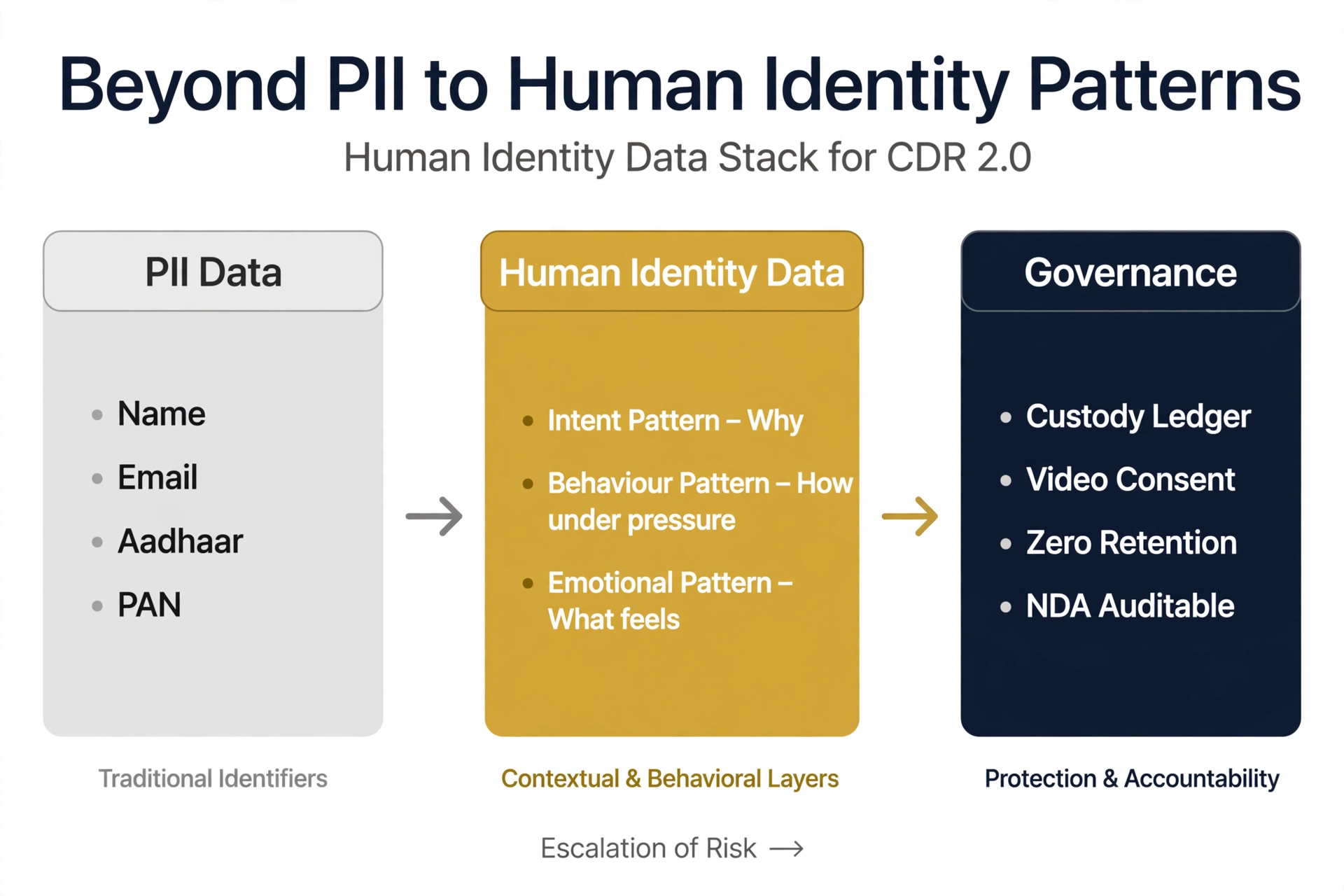
Get the watermarked personal copy — Private VPS • Zero Retention • Ledger ID.
Full F6, F7, F8 frameworks + custody ledger templates + EU AI Act Art 50 mapping + video consent process + Claim 1 to 36 mapping. No newsletter. No data monetisation. Watermarked pixels survive screenshot.
Email copy simulated • IP logged • Zero Retention